:
在任何研究中我们需要谨记对于各种名词的用法 要保持 clarity 以及 constancy [oops这也是我thesis中经常犯的一个问题]
主要的reading:The foundations of research by Grix, Jonathan
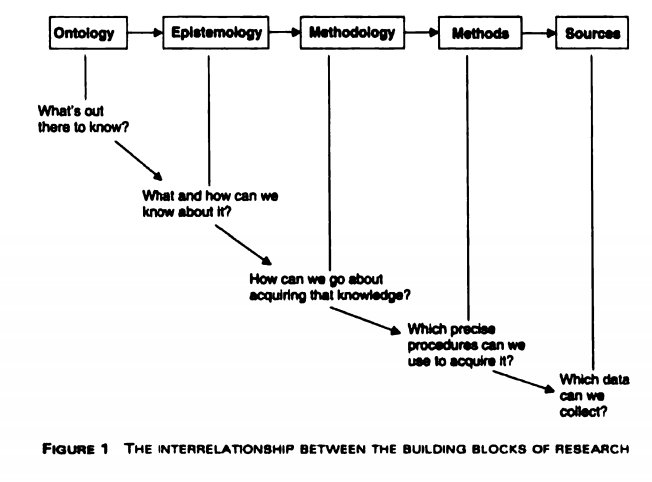
Ontology and epistemology
本体论/存在论 ontology (what is out there to know about): 旨在探讨本质,本源,解释存在,本质与现象,物体是什么, 之于什么存在。也就是找寻物体及联系,概念及其概念化体系,又或者说是实体与环境。按维基百科的说法,本体论者通常试图确定实体类别系统是 以及 包括了什么,建议的类别包括物质 属性 关系 状态和事件。
举个例子,比如如果对应着计算机工程里的说法,本体论的应用在于将某些domain里的概念空间实体映射到计算/系统空间,找寻并构建相应的机制,从而有利于构建数据治理的框架。当然在某些学科里,我更倾向于是这些研究借助了这样一种概念,而实际并没有上升到非常形而上学的哲学阶段,只是为了说明本研究是要去实体化这样的概念以及提取出相应的机制)。
关于ontological inconsistencies: (Clough and Nutbrown 认为) 很多研究者在研究他们的课题时 常常选择不止一种研究范式,比如根据目的的不同经常会用normative (规范性,也就是how)和 interpretive (解释性研究,也就是why),这些也都是很正常的。
关于ontological claims: (Balikie, 2000) “claims and assumptions that are made about the nature of social reality, claims about what exists, what it looks like, what units make it up and how these units interact with each other. 至于为什么说要在研究前先提/确定这些ontology 是因为在进行任何研究之前 肯定已经存在着某种image 因而要先对这些picture做出一定的认知描述或者假设 定位
关于 ontological positions:体现的是研究者如何认知世界的本质 (如果给个横线来表示认知的话,这一头是realism,另一头是relativism,中间可能有structural,critical 等等的realism)。
举个例子 (by Marsh and Furlong, 2002), 问 男的 和 女的 是不是essentially different, 有两个不同的认知position:1)men and women are born different. 这是foundationalist/essentialist的看法,指不依托于人的认识 而是自然就存在那的;2)difference between men and women are socially and discursively constructed. 这就是anti的认知,也就是认为 人们对于社会现象的观察造成了这种看法。(其实差不多就是自然科学和社会科学的两种角度)
Foundationalism (commonly seen as objectivism or realism):reality is thought to exist independently of our knowledge of it + can be rationally and universally grounded. 换句话说,如果他们有着相应的能力和判断 研究者们在研究objects的时候会用到相同的view 或understanding,并且得到类似的结果 (objective, absolute, and unconditional truths, by Lakoff and Johnson, 1980)。也经常被混用为 实证主义positivist和现实主义realist (这里先不谈区别), 也就倾向于用quantitative的方法
Anti-foundationalism (commonly seen as constructivism or relativism): reality is socially and discursively ‘constructed’ by human actors + can not be rationally and universally grounded. 认为生活在现实世界里的观察者不可能是客观的 并总是”affected by the social constructions of ‘reality’”- 社会行动者本身已经建构的社会意义框架里, 因此不能够像foundationalism一样直接对观察到的现象和社会现实之间建立一个客观明确的因果关系。
这个认知下的世界里 objects总是会被赋予社会角色 又或者是权力等等这样的社会意义。而这又可以evoke了一种叫double hermeneutic (双重解释学, by Gidden)的理论,就是社会科学包含两种意义框架,其一是普通行动者构成的充满意义的社会世界 (one hermeneutic level), 然后是由observer(经常认为是社会学家)interpret这样世界的interpretation组成的解释语言 (a second hermeneutic level). “弄清楚在不断变化的时空情景中行动者认知能力的局限性是什么,就是社会科学的根本问题”
Post-structuralism (有时被归类到anti-foundationalism): 否认了ontology和epistemology的区别,否认 extra-discursive ‘reality’ 的存在
Post-modernism (an ontological position, 多元价值取向,对过去的/权威的/确定的知识论述批判,哈哈 知乎上有一个回答说现代主义关注 什么有用,后现代主义问 什么爽 ): ‘deconstructivism (with Derrida)’, ‘genealogical approach’ (Foucault), ‘discourse analysis’ [然而我还是不知道这个postmodernism是个什么东西]
知识论/认识论 epistemology (what can we know and how can we know about it):是希腊词 episteme(knowledge)和 logos (reason)的结合。顾名思义,研究什么是知识,什么不是,怎么才能获取知识 (也就是下图中黄色区域的knowledge)即知识既是真的,又被相信是真的,语言表述就是“我知道A,我相信它是真的”. 也就是 a theory of knowledge.
一个著名的问题:假如我感受到的一切实际上并不存在 而只是有人编织的一场梦境,怎么推测出这是真的还是假的?这就是说当本体论的应用不能够让我们理解这个世界,怎么才能证明我们对世界的这些看法是能够以及如何才能被理性证明?这就涉及了两个很重要的问题:1)世界的真实性 客观性 是否是可以被观察到的;2)我们是否可以仅仅通过简单的直接观察来建立一种对世界的real relationships 的观察呢,还是说有些relationships存在着但无法直接被observe到
Two broad epistemological positions: scientific (sometimes positivist) and hermeneutic (or interpretivist) position.
Positivists (towards empirical realism): 附着于realist,foundationalist ontology (Guba and Lincoln 1998),认为可以在社会现象间建立causal relationships,并且发展出explanatory, and indeed predictive models. Again,一名实证主义者探寻的是causal relationships, 同时更倾向于定量研究并得到客观和generalizable的结果。
Realists (注意realism 有时又是ontological position 而不是epistemological position): 类似于positivist的思想,但并不privilege direct observation,而且认为社会现象中存在很多不能够被直接观测到的deep structural relationships, 但同时这些隐藏的关系又对解释行为结果有着至关重要的影响。比如, 尽管我们可以在日常生活中看到很多是在Patriarchy (父权制)作用下的结果 (比如一所学校中男女的比例),但父权制本身作为一种结构很难被观察到。[因此,在对一些现象进行解释的时候 常常混用定性定量,比如 interpreting causal links from observable outcomes
Interpretivist:更注重的是 understanding,以及 subjectivity, 而非explanation,在意的是行动的含义 意图,在意的是agency,在意的是怎么解释一些 根深蒂固于一大串概念以及实践行为中的带意图性的行为,倾向于用定性研究。它是一个umbrella term,比如relativism,phenomonology, hermeneutics, idealism, symbolic interactionism, constructionism. 共同之处最明显是 常常被认为是positivist的反面,即 anti-positivist。(interpretation:scholars who emphasize “interpretation” seek to illuminate the intentional aspects of human behavior by employing Verstehen.
Post-positivism (emm, 它也被归在research paradigm/theoretical perspective,也有时被认作realism) 更多的是认为是一种 critical realism, focus在interpretation of meaning.
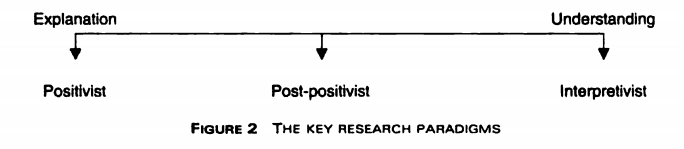
The tools of research in social science:
a continuum of research tools that have as their intention “explaining” social phenomena at one end, and “describing” social phenomena at the other (Gris, p.19).
值得注意的是对这些词的选择 比如一些历史主义流派的(比如Max Weber的protestant ethic) 充其量只是描述或者试着去结构一些现象的更多的是叫typology 或者ideal types,而不是theory [ok这个也是我常犯的一个错误,比如错误地用了grounded theory这个词 但其实自己并没有一个理论要进行认证]

关于theory:theory最重要的目的是给后面的empirical section提供依据。(Gerry Stoker, 1995:)Good theories select out certain factors as the most important or relevant if one is interested in providing an explanation of an event. (Popper, 1959: ) Theory ought to be ‘falsifiable’, and ‘must be possible in principle to falsify a theory.’
—— 比如从rationalist positivist paradigm的角度,theory是一个可以 ‘order, explain and predict facts’ 的工具,比如 rational choice theory (RCT)
—— 从(critical) realist paradigm 的角度,theory的目的是为了 identify 那些并不一定看得到但却可以identify的generative mechanisms
—— 对interpretivist,theory 不是为了被test,而是要基于所观察 所搜集到的data 来build theory.
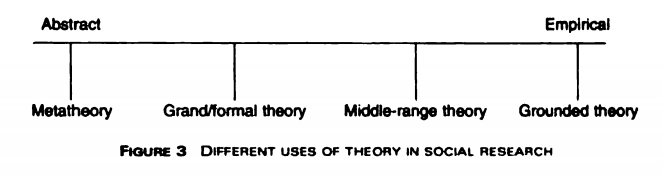
Theory 的种类: 1) metatheory,theory of theory. 一个指代着所有研究中最基础的假设以及哲学基础,说明/包括了 以上提到的 某某认知论是基于某某本体论 (interpretivist epistemology founded on an anti-foundationalist ontology)这样的元理论; 2)grand or formal theories, 提供了一个囊括了重点概念 原则的概念框架;3)middle range theory/substantive theories, 只是针对有限变量下的特定情势;4)practice/grounded theory 如下图:
(关于inductive和deductive theory):简单来说,induction就是指结论可以从实证证据直接的观察到的过程,这样的研究不需要设置假设,研究仅仅是依赖于empirical data,这个过程常常和interpretivist research以及质性研究连在一起;deductive 自然就是前者的相反面,比如理性选择理论假设actors做选择时会maximize他们的个人效益。
关于model:需要避免与 research paradigm or tradition; research perspective混为一谈。这里强调的model是从现实抽象出的有变量有关系的这么一种picture
关于typology:有时也被称为taxonomy,这两个词都代表着classification方法,但实际还是有着一些区分。最大的不同是typology更多是从一种concept的角度来探讨 而taxonomy是inferred from empirical cases
关于 ideal type:founder – Max weber。提出的背景是为了在复杂的社会背景下引入以下比较纯粹的理想概念,比如 the pure competitive market, 比如 资本主义精神,比如 科层制。都是作为一种 heuristic tool用来分析概念 且可以反映事物本质特征的分类概念,怪不得其实也说这个词本身就是被用来区分 analytical concepts 以及 classificatory concepts 来反映现实中比较难反映的一些元素。(An ideal type is “formed by the one-sided accentuation of one or more points of view and by the synthesis of a great many diffuse, discrete, more or less present and occasionally absent concrete individual phenomena” “In its conceptual purity, this mental construct cannot be found empirically anywhere in reality” Weber 1949:90)
关于paradigm:有好几种paradigm的用法。第一当然是很经典的Kuhn的理论,就是把research paradigm 即 科学范式 看成是intellectual activity的制度化(institutionalisation),从而给一些科学研究遵从的公认的/基本定律/理论/perspective了一个理论框架 (包括了共有的世界观 理论 方法等等). 科学革命也就是范式的转换 [然而这些转换的临界条件以及一些边界界定到底是怎样并不清楚];第二种用法是describe crude and broad groupings of certain approaches to the study of a specific topic, 比如在研究共产主义为何崩溃时,学术文献可以笼统地被分为 从权威角度出发的自上而下 或者 从公民角度自下而上的research paradigm;第三种用法是用来描述研究中的一些broad approaches, 比如 positivist (实证主义范式,即任何社会显示可以best gained from human behavior through observation and reason) or interpretivist (解释主义)paradigms
关于discipline:主要指的是传统的那些学术分类 像economics, history, 等等;interdisciplinarity. Transdisciplinarity. Cross-disciplinarity. Multidisciplinarity. (gris认为采用 ‘cross-fertilisation’ between disciplines 可能更恰当,因为就像dogan指出的那样,很多时候你的课题可能只是 relations between sectors of different disciplines, 而不是 between whole disciplines, 因此不能说是 interdisciplinary endeavor.
关于perspective:an academic perspective pertains to certain approaches within a discipline. 比如在政治科学中的新制度主义和理性选择;或者女权主义 后现代的视角
关于concepts:可以是idea,notion,metaphor,代表着最简单的一种abstraction。所谓operationalising concepts [这个词我之前用错了], 也就是将他们转成可以测量的变量,which,是研究中很困难的一部分。使用concepts时要严格注意其产生的背景以及changes in the society since the original concept was introduced,以免发生误用 滥用。比如 不同国家可能对于“stakeholders”的使用不大一样,又或者有一些 catch-all term 例如 比较研究”civil society, ” 不同的词用法也不尽相同。
Methods (方法): 与ontological and epistemological assumptions, 提出的问题以及数据的收集相连,即如何apply这些方法来达到你的目的。”techniques or procedures used to collate and analyse data” 这里强调了 一个好的scholarship不仅仅呈现某一个方法的结果,更重要的是怎么employ,cross check, collate and analyse the data that methods assist you in collecting. 同时,methods有两个基本的功能:1)提供了一种收集数据的方法视角;2)可以让其他的研究者能够重现这个研究。
Quantitative:三个基本特征:variables, verifiability, and offer a value-free analysis. 最基本的一个技能,是回归分析,因此需要对基本的回归方法有所了解
Qualitative:ethnographic, thick description, triangulated.

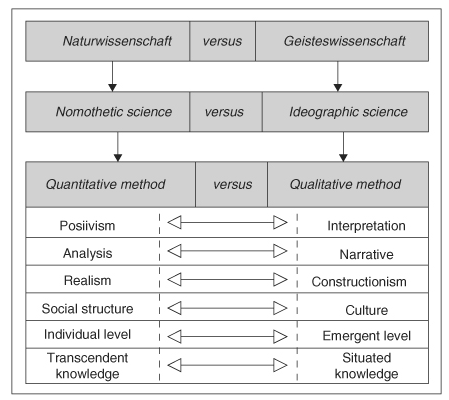
与causality相关的方法:
下面这个表是来自一篇讲complex realist and configurational approaches to cases 的chapter,主要是给描述以及representing causality的方法做了一个区分。通常研究者会通过 文字 声音 图片 数字等等进行描述,并且还会用描述性研究 或者图论 或者分类。而对于研究causality,研究者们常采用narrative,比如单一的narrative可以告诉我们一个ideographic causal representation of causation, 而多个故事则可以比较出一些general accounts 或者其他的一些elements显现出一整个逻辑;又或者用variable-based以及probabilistic methods of linear modeling, 或 case-focused and deterministic based on configurational approaches.

Methodology (方法论):更多的是代表研究策略的选择逻辑,一种阐述你如何通过xx来解决你提出的研究问题的途径,即你为什么+选择什么研究方法。例如在政治科学的论文中,methodology section更多是替以 “ontology and epistemology” 有 assumption,hypothesis,conceptual approach, and justification, and consequently, the data sources.
hypothesis: 对两个或以上的concepts的关系提出了某些说法,并且认为其中某个会对另外的产生影响。因此 这些假说需要被 measured 以供 tested。在陈述这些假说的时候通常会用schemes或diagrams,辅以boxes arrows来说明要研究的关系

来自Culpepper, 2003 的一个例子:如果想实证研究合作是成功还是失败 以及是否形成了共同的知识,在选择rationalist还是constructivist的方法时需要注意:如果是rationalist,那么就是从个人主义的大前提出发,而constructivist则是从一个holist(整体论)的角度 (比如网络),这两种角度就会造成研究层次(units)选择的不同
A good, clear research proposal should: 1) 告诉读者你的项目是什么,解释进行的context,rationale,aims;2)一个简短的文献说明以表明你的工作如何fit in当今的学术讨论;3)你将采用的方法以及简述你所采用的角度如何fit in已有的研究;4)研究问题和假设,你究竟要做什么,你的问题,你的角度,研究的层次,研究单位,以及一个对结论的概括,注意你的问题最好是能够对real world有一些贡献;5)Your methods of enquiry,你将如何 通过什么方式收集和分析数据,你的研究问题需要这些方法吗;6)你将用到的数据依据;7)本研究的重要性 创新性 以及可应用性;8)你所碰到的任何问题,以及克服的方法;9)specific research training required to undertake the project; 10) 时间表
Levels of analysis: 两个常见的:macro level,system or structure-centered; micro level, individual or actor-centered
Types of study: 1) descriptive. 2) exploratory, 更多的是检验最开始的假设,检查数据的可获得性,以及探索案例的合理性, 为将来可能的field work做准备;3)explanatory
Structure and agency problem: 对于某些政治现象的讨论,可能认为individual的影响会多,比如像ACF,也有可能是认为macro的作用,概括来说就是对于 structure or agency 的解释作用到底是应该更被重视 放大 还是说其实并不那么重要,到底他们能够shape 或者影响 xx的程度有多少呢.
(一些题外话:我个人觉得最不好的一点是,看的东西过杂 未整合 或者说未深入,比如我得用到一点科学哲学的点,但我最基本的像ontology的名词用法都不清楚;又或者我要写一些方程,但最基本的符号公式也忘得一干二净,一切都是应付 为了能用 为了一时明白 而关于体系的构建 尽管我自己提醒自己了若干次 往往也是如此。于是挣扎之余发了很多碎片化的东西,但方向不明 依旧未成体系 你要问我四年内学了什么 我只能说 可能接受新概念学习新工具的速度还行 但理论框架 一团糟 一开始动笔 往往是摘取别人的思想 别人的话 我自己到底想做什么 我能构造发展新的什么 剖开一层层看似复杂的表面 往往是幼稚到极点 或者是cliches。所以建这个网站的初心是能够留下一些pieces 并且可以不断的反刍 以及重新学习)

 SAAN KIM
Leave a comment